Adam and Eve: A Mirror for Modern Marriage
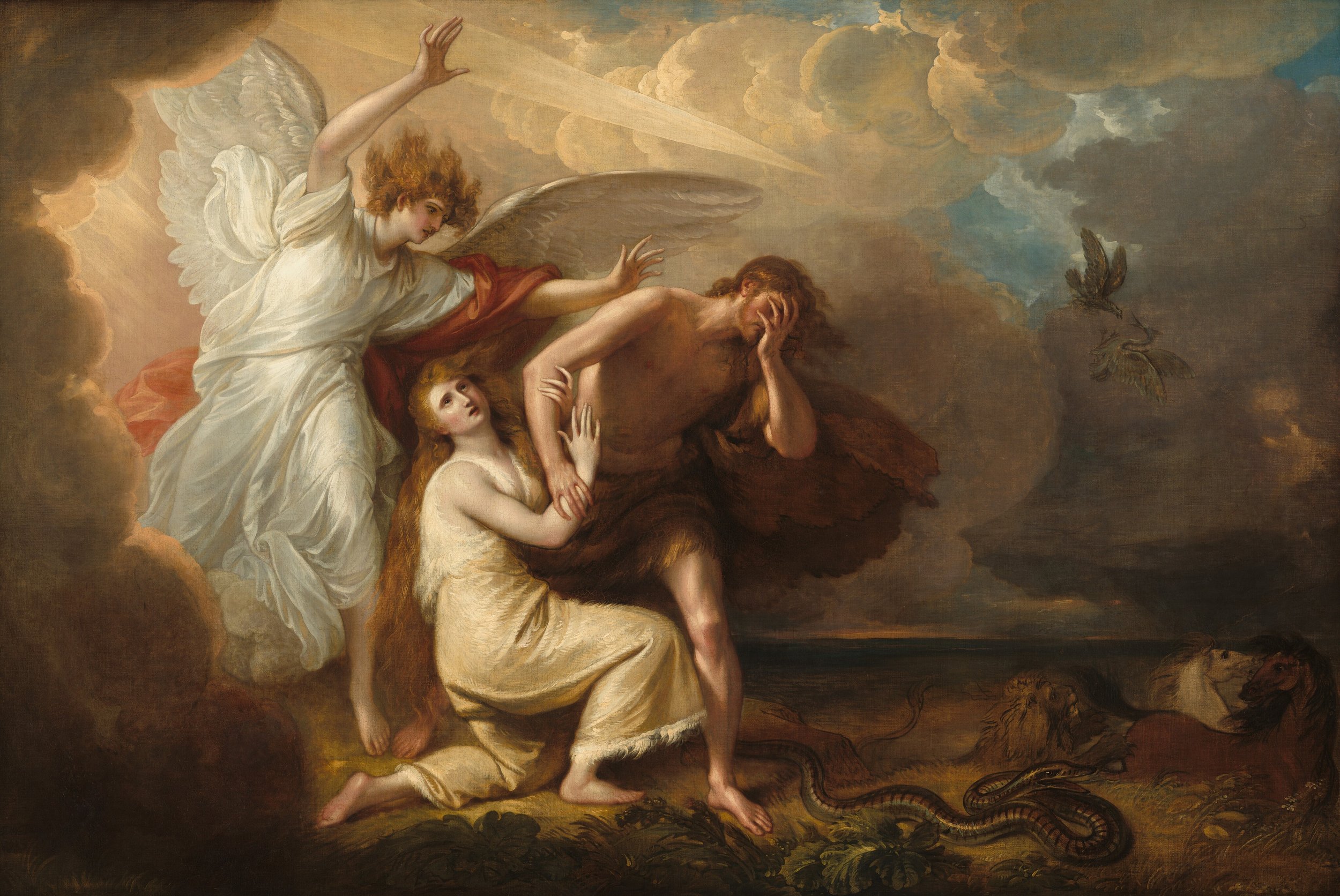
When we read the story of Adam and Eve, it’s tempting to keep it at a distance—ancient history, symbolic theology, something abstract and far removed from modern life.
But the more time I spend walking with married couples, the more convinced I become: Genesis is painfully current.
One of the most common patterns I see in marriage today echoes the Garden itself—
a passive husband and an anxious wife, both reacting to fear, both missing their shared call to communion.
The Curse of Adam and the Curse of Eve
After the Fall, both Adam and Eve experience the distortion of their original call.
The Curse of Adam: Passivity and Abdicated Leadership
Adam’s curse often manifests as passivity, irresponsibility, and a failure to lead. Rather than protecting and initiating love, he withdraws, avoids conflict, and relinquishes responsibility. Father Chad Ripperger describes this curse as a refusal to take responsibility—shrinking from leadership and allowing fear, comfort, or external influences to dictate one’s life.
This is not about oppression. It is about the loss of spiritual leadership.
When men abandon their vocation as protectors, providers, and spiritual heads, disorder follows—in the family, the Church, and society.
The Curse of Eve: Control, Anxiety, and Overfunctioning
Eve’s curse often manifests as anxiety, hyper-responsibility, and a struggle for control. Where trust once reigned, fear takes over. Rather than receiving love, she feels compelled to manage outcomes, correct behavior, and carry emotional and relational burdens alone.
This overfunctioning is not rooted in dominance, but in loneliness.
Not in pride, but in fear of abandonment.
When Eve reaches for safety, it is often because Adam has stepped back.
And when Adam steps back, Eve pursues.
Thus the cycle continues.

The Garden Pattern Still Repeats
When conflict enters Adam and Eve’s story, notice what happens.
Adam withdraws and remains passive. Adam’s passivity is not merely a failure of leadership; it is a retreat from emotional engagement when intimacy feels demanding, exposing, or costly.
Eve moves forward—trying to manage, correct, or protect.
In Emotionally Focused Therapy, Dr. Sue Johnson calls this pattern the Protest Polka. One spouse protests emotional disconnection while the other denies it or withdraws. Johnson uses the image of one spouse banging on a door to restore connection while the other pushes the door shut.
In other words, when tension rises:
Many husbands cope through withdrawal or passivity, often driven by fear of inadequacy or rejection.
Many wives cope through pursuit or pressure, often driven by fear of abandonment or disconnection.
This pattern isn’t merely anecdotal. Research by Dr. John Gottman consistently finds that approximately 85% of stonewallers in heterosexual relationships are men (Gottman, 1994). In moments of conflict, many husbands move toward emotional shutdown, while wives are more likely to pursue engagement through protest, criticism, or demands for connection.
The Protest Polka is the relational and emotional manifestation of the Fall. The Curse of Adam and the Curse of Eve do not remain abstract theological realities; they play out in the nervous systems, attachment patterns, and conflict cycles of modern marriages. What begins in Genesis becomes embodied in how couples pursue and withdraw today.
Adam effectively says, “This isn’t really my problem.”
He blames Eve—and indirectly God, who gave him his wife.
Eve bears a weight of responsibility that was never meant to be hers alone.
Sound familiar?
This pattern doesn’t come from malice.
It comes from disordered love—from fear replacing trust, and self-protection replacing self-gift.
Two Individuals… or One Body?
Marriage is not a partnership of two independent projects sharing a home.
It is a union—one flesh, one body, ordered toward love, life, and mutual sanctification.
Saint Paul is unmistakably clear:
“Husbands, love your wives, as Christ loved the Church and gave himself up for her.”
(Ephesians 5:25)
And just as clear about unity:
“For no one ever hates his own flesh, but nourishes and cherishes it, just as Christ does the Church.”
(Ephesians 5:29)
A husband is not called to dominate.
He is called to lead with courage—acknowledging his fears, seeking patience when needed, and offering himself through servant leadership.
A wife is not called to manage her husband into holiness. She does not want to be his mother.
She is called to live in communion—offering love, truth, and vulnerability while entrusting her husband’s growth to God.
Both are called to self-sacrificial love.
Head and Body: Not Hierarchy, but Harmony
Catholic anthropology speaks of man as head and woman as body—similar to Christ as the head and the Church as the body, but this language is often misunderstood.
Headship does not mean control.
It means responsibility.
The head exists to serve the body by directing it toward the good, protecting it from external threats, and navigating the outside world in service of the whole.
The body exists to love, nurture, and guide the head—attuned to the internal state of the relationship, nurturing the heartbeat, sustaining the inner world so the head can act prudently and courageously.
Saint Paul uses this same image when speaking about the Church:
“If the foot should say, ‘Because I am not a hand, I do not belong to the body,’ that would not make it any less a part of the body.”
(1 Corinthians 12:15)
“The eye cannot say to the hand, ‘I have no need of you.’”
(1 Corinthians 12:21)
When a husband disengages, the marriage becomes limp.
When a wife overfunctions, the marriage strains.
When either resents the other, the body begins to fracture.
The Call Back to the Garden
Healing does not come from blame—it comes from conversion.
Conversion of heart begins when the pursuing partner softens, learning to protest with vulnerability of emotions and trust rather than pressure and criticism.
In response, the withdrawing partner increases distress tolerance and chooses to stay emotionally present and receptive rather than shutting down. Safety is restored when the pursuer no longer feels abandoned and the withdrawer no longer feels criticized or shamed. It is about love that dies to self.
Marriage thrives not when spouses compete or correct one another, but when each asks:
“How can I love you more like Christ today?”
One Flesh, One Mission
Adam and Eve were never meant to stand opposed as two individuals in a marriage.
They were meant to stand together as one flesh.
The same is true now.
Marriage is not about winning arguments or fixing your spouse.
It is about understanding one another in the slow, holy work of becoming saints—together.
Because when one part of the body suffers, the whole body feels it.
And when one part loves well, the whole body flourishes.
References
Gottman, J. M. What Predicts Divorce? Hillsdale, NJ: Lawrence Erlbaum Associates, 1994.
Johnson, S. M. (2008). Emotionally Focused Couple Therapy. Guilford Press.