Community as the New Currency
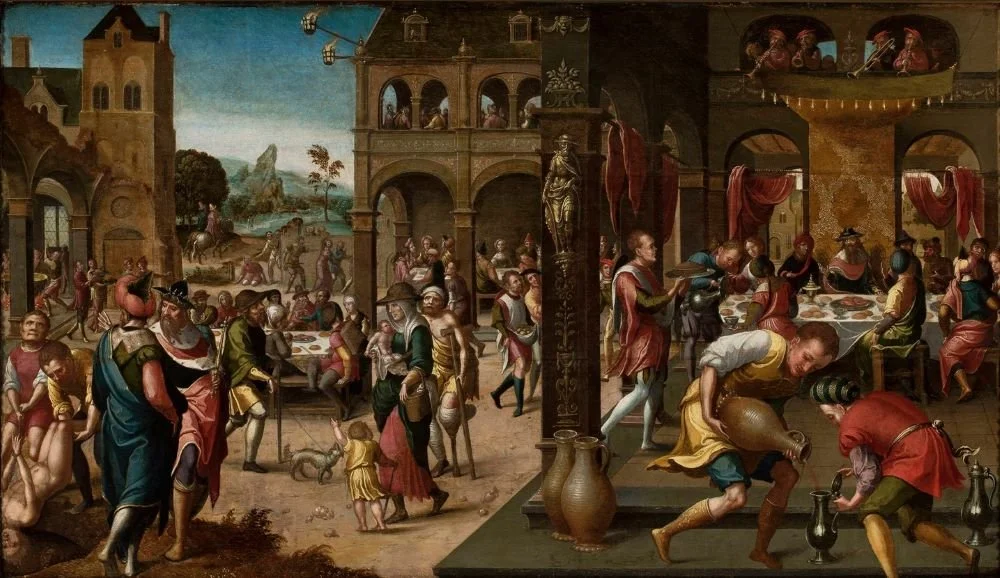
"Parable of the Great Banquet" by Brunswick Monogrammist, circa 1525 (Artvee)
We live in an age of constant connection, yet many people feel increasingly alone. We can communicate instantly, follow hundreds of people, join countless online groups, and find others who share nearly any interest. Yet many of these connections remain shallow. They are easy to enter, easy to leave, and rarely rooted deeply enough to hold us when relationships become inconvenient.
Much of modern community is built around shared interests: a hobby, political cause, favorite creator, professional identity, or stage of life. These connections are not inherently bad. Shared interests can help friendships begin. The problem arises when common interests become the only foundation holding a community together. If our preferences change or conflict develops, there may be little reason to remain.
We end up with countless special-interest groups but few communities capable of transforming the heart and mind.
When Connection Becomes a Commodity
YouTube, social media, membership platforms, and services such as Patreon have recognized our hunger for belonging. People pay to support their favorite artists, speakers, and content creators and sometimes to gain access to an online community surrounding them. These platforms can foster creativity and meaningful connection. They can also reveal something deeper: people are searching for a place to belong.
Digital spaces may connect us across great distances, but they cannot fully replace embodied relationships. Many people are tired of digital-only connection, surface-level interaction, carefully managed images, and the pressure to project a polished version of themselves. We want to be seen, but we fear what might happen if we are truly known.
Real community requires more than consuming the same content or appearing in the same place. It asks something of us.
The Cost and Gift of Being Known
Investing in community is challenging, but it is necessary if we are to grow in charity. Community gives us opportunities to practice patience, forgiveness, sacrifice, generosity, and fraternal correction. These virtues cannot be developed in isolation. They are formed through relationships with real people, including people who disappoint us, misunderstand us, or see the parts of us we would rather conceal.
Writer Tim Kreider captured this tension well:
“If we want the rewards of being loved, we have to submit to the mortifying ordeal of being known.”
Being known is vulnerable. It means allowing others to encounter more than our strengths, accomplishments, and carefully chosen opinions. It means permitting trusted people to see our needs, limitations, wounds, and blind spots. It also means accepting responsibility for others. We do not simply arrive, receive what we want, and leave. We learn to notice who is missing, help carry another person’s burden, repair ruptures, and contribute to the good of the whole.
Community is not merely a resource we use. It is a good we help create.
Winning Our Brother

Joseph forgives his brothers (Genesis 50: 15-21)
Christ does not call us to self-sufficiency or to all become hermits with an isolated spiritual life. From the beginning, Scripture tells us, “It is not good for the man to be alone” (Genesis 2:18). Our need for relationship is not a defect or an inconvenience. It is part of how God created us.
Jesus also teaches us what to do when community becomes difficult:
“If your brother sins against you, go and tell him his fault between you and him alone. If he listens to you, you have won over your brother” (Matthew 18:15).
Christ emphasizes the telos of relationship: you have won over your brother. The goal is not to win the argument, defend our pride, punish the offender, or prove that our sense of justice is correct. The goal is reconciliation for the salvation of souls. Fraternal correction, when offered with humility and charity, seeks the good of the other person and the restoration of communion.
This is one of the gifts of genuine community. It provides a place where others can challenge us to love Jesus more. Not because they consider themselves spiritually elite, but because they recognize that salvation is not a private project. We are responsible for encouraging one another toward holiness daily while remaining aware of our own need for mercy and correction (Hebrews 3:13).
Christ promises to be present within this shared life: “For where two or three are gathered together in my name, there am I in the midst of them” (Matthew 18:20). Christian community is more than a gathering of compatible people. It is a place where Christ desires to dwell and work among us.
Making Relational Deposits
Healthy community requires intentionality. Friendships rarely deepen through good intentions alone. Like deposits into a bank account, relationships grow through repeated acts of attention, generosity, and care. Without those deposits, a friendship may stagnate. If we continually withdraw through neglect, criticism, unrepaired conflict, or one-sided demands, the relationship may eventually become depleted.
Relationship researcher John Gottman describes a magic ratio of 5:1 often associated with stable, healthy marriages: five positive interactions for every negative interaction during conflict. While friendship and community are not identical to marriage, the principle offers a helpful question: Am I making enough positive deposits into the lives of the people around me?
Those deposits do not need to be dramatic. They may include:
Sending a message when someone comes to mind
Inviting a person to coffee or a meal
Remembering an important concern and following up
Listening without immediately offering advice
Expressing gratitude or encouragement
Showing up consistently, even when it is inconvenient
Apologizing and repairing the relationship after causing hurt
Speaking a difficult truth with gentleness and genuine concern
We cannot demand deep community while offering only occasional presence. If we want relationships with roots, we must remain long enough for those roots to grow.
A Different Kind of Wealth
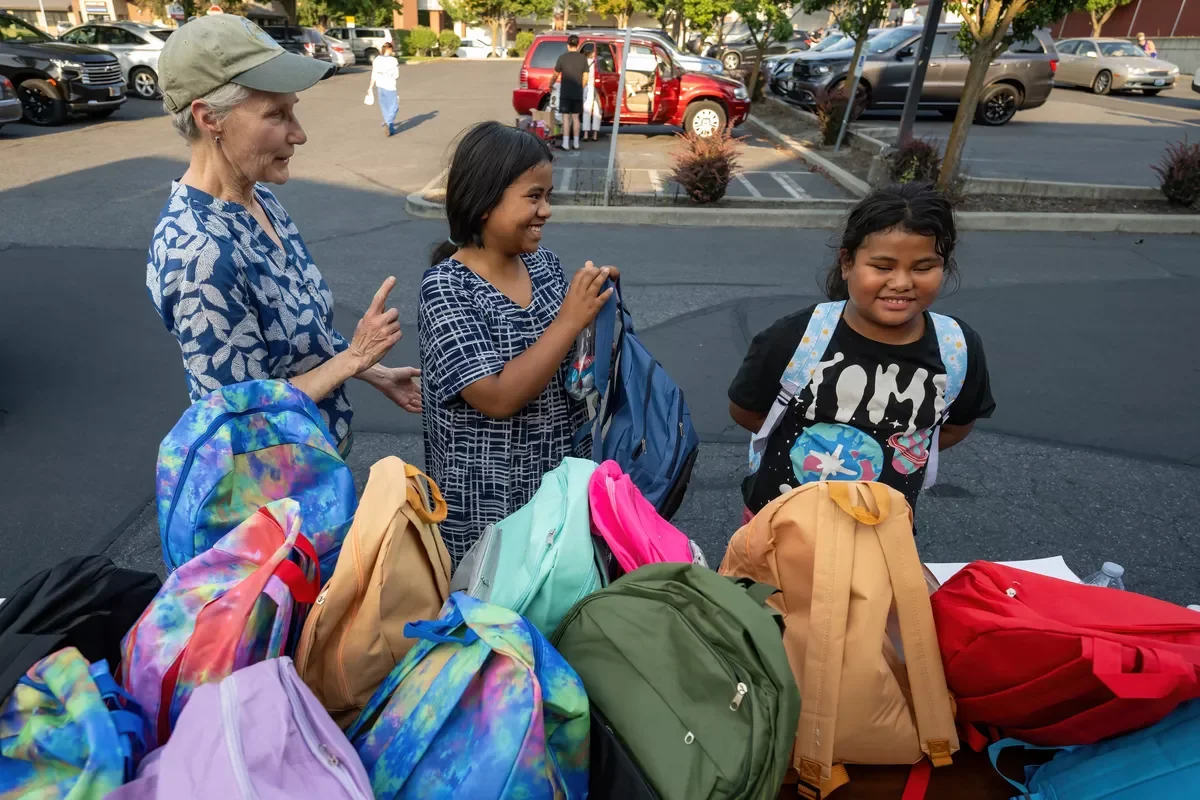
Volunteer Mary Ellen Anton helps Shamako Jerilong, 13 and cousin Youli Jerilong, 9 pick out backpacks filled with school supplies, Tuesday, August 19, 2026. Catholic Charities gave away 300 school backpacks during a drive-thru set up in the parking lot of at St. Anne's Children and Family Center. (Colin Mulvany/For The Spokesman-Review)
Community may be the new currency because trustworthy, enduring relationships have become increasingly rare and therefore increasingly valuable. Yet Christian community is not something to hoard, purchase, or consume. It is something we receive as a gift and cultivate as a good stewards.
The measure of a rich community is not how many people attend, how similar everyone appears, or how comfortable every interaction feels. Its richness is found in whether people are increasingly known and loved, whether conflict leads to repair, whether the vulnerable are cared for, and whether each person is being drawn more deeply toward Christ.
Building that kind of community takes time. It requires intentionality and vulnerability. It asks us to risk being known and to accept the responsibility of knowing others, to be our brother’s keeper (Genesis 4:9). But through that difficult and beautiful work, our relationships can become more than networks of convenience. They can become places of transformation: communities in which we help one another grow in charity, carry one another’s burdens, and encounter Christ in our midst.
Reflection Questions
How are my relationships today?
What relational deposit can I make this week?
What prevents me from allowing trusted people to know me more deeply?
Is there a strained relationship in which Christ may be inviting me to seek repair, not merely to prove that I am right, but to win over my brother or sister?