Love Your Enemies: In the Aftermath of the Charlie Kirk Memorial
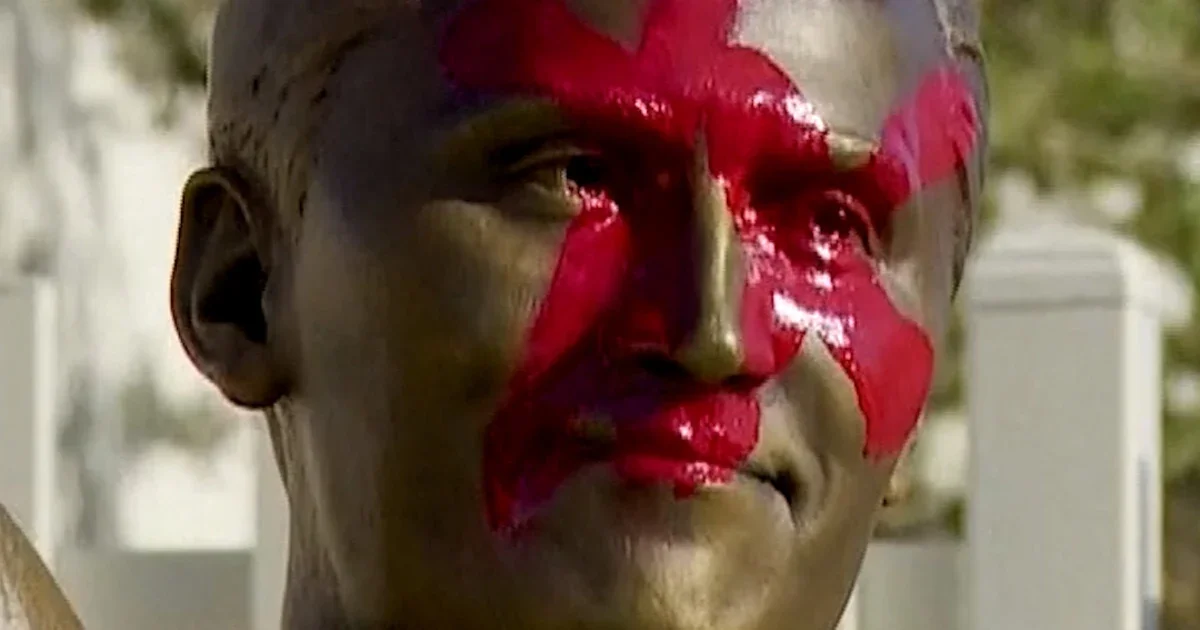
The newly unveiled statue of Charlie Kirk after it was vandalized outside the Turning Point USA headquarters in Phoenix, Arizona. Photograph: TPUSA/Twitter/X
Political discourse increasingly feels less like a conversation and more like a contest. We enter discussions prepared to defend our side, expose hypocrisy, and prove the other person wrong. Success is measured by whether we delivered the strongest argument, gained the most approval, or left our opponent without an answer.
But when winning becomes the goal, relationships often become casualties.
While some platforms and commentators have begun pursuing more meaningful dialogue about pressing issues, the recent vandalism of a newly unveiled memorial statue honoring Charlie Kirk at Turning Point USA's headquarters in Phoenix offers a painful example of political tribalism. Neighbor turning on neighbor. The statue was defaced with red paint only days after it was installed to commemorate the first anniversary of his assassination. A nearby Christian memorial display was also damaged, prompting a police investigation.
People may strongly disagree about Kirk’s political positions, rhetoric, or legacy. Peaceful disagreement and protest remain important rights within a free society. Vandalizing a memorial, however, does not advance understanding. It intrudes upon the grief of others and communicates that political opposition has become more important than human dignity.
This should concern us regardless of our political affiliation. When we lose the ability to respect the dead, allow others to mourn, or recognize the humanity of those with whom we disagree, something deeper than political civility has been lost.
When Our Neighbor Becomes an Enemy

Political division rarely remains confined to elections and public policy. It enters marriages, friendships, families, workplaces, parishes, and neighborhoods. The person across the dinner table gradually becomes a representative of everything we fear or oppose. In psychology, we call this social categorization which provides a mental shortcut to decipher information which creates a sense of safety and comfort. This mental process alongside confirmation bias creates a great divide in current dialogue of “us vs them” mentality.
Instead of asking, “What has shaped this person’s concerns?” we ask, “How can anyone believe that?”
Instead of listening to understand, we listen for weaknesses.
Instead of seeing a neighbor, we see a label. When people are labeled, they may begin to change their behavior to fit that specific box. This is called the Looping Effect. Thus, deepening the divide.
This is one of the great spiritual dangers of political polarization: it encourages us to reduce a human person to a label. Tribalism can lead us to the violation of human dignity and dismantles solidarity, one of the core pillars of Catholic Social Teaching (CST). The emphasis of solidarity is on interconnectedness of human beings as members of one human family. Once someone has been categorized as conservative, liberal, progressive, traditional, left-wing, or right-wing, we may begin responding to the category rather than the person.
But no human being can be summarized by a political label or party. Every person carries a history, fears, wounds, loyalties, responsibilities, and hopes that we may not immediately understand. Every person, including the one whose convictions we find offensive, possesses an inherent worth and dignity given by God to be respected and upheld that does not depend upon our agreement.
Understanding Is Not the Same as Agreement

Shifting the goal from winning to understanding does not mean abandoning truth or treating every belief as equally good. The virtue of charity does not require moral relativism. Some ideas are false, unjust, or harmful, and Catholics may be called to challenge them courageously.
Understanding means sincerely seeking to know what another person believes and why before responding. As Brené Brown explains in the RSA short “Brené Brown on Empathy,” understanding does not mean agreement nor sympathy. Empathy allows us to understand another’s perspective while still be able to disagree with their behavior or outcome.
We might ask:
“What experiences led you to that conclusion?”
“What concerns you most about this issue?”
“What value are you trying to protect?”
“Is there anything about my perspective that you believe I am overlooking?”
“Would you be willing to hear what concerns me?”
These questions do not require us to surrender our convictions. They allow us to express those convictions without treating the other person as an obstacle to be defeated.
Winning an argument may temporarily satisfy our pride. Understanding creates the possibility of persuasion, reconciliation, and genuine relationship.
Love Your Enemies
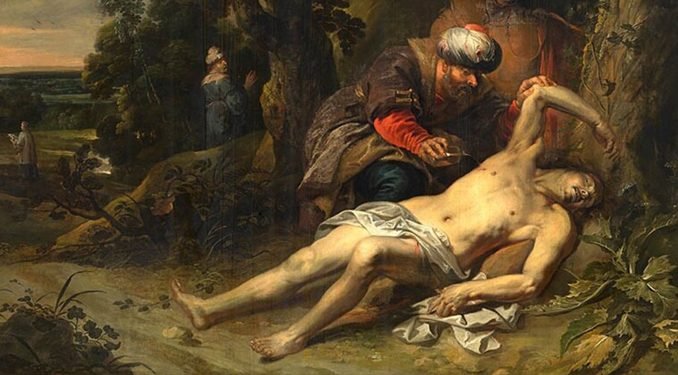
Christ does not command us merely to tolerate our enemies. He tells us, “Love your enemies and pray for those who persecute you” (Matthew 5:44).
This command is difficult precisely because it applies when the other person has not earned our affection. Christian charity is not reserved for those who are civil, reasonable, or politically aligned with us. It is tested most clearly when we encounter hostility, mockery, injustice, or contempt.
Loving an enemy does not mean excusing vandalism, violence, dishonesty, or abuse. Justice and accountability remain necessary. It means that even while opposing wrongdoing, we refuse to desire the destruction or humiliation of the wrongdoer.
Christ reveals the restorative purpose of correction when He says, “If your brother sins against you, go and tell him his fault, between you and him alone. If he listens to you, you have gained your brother” (Matthew 18:15). Christian correction is not about satisfying our desire for self-justification. Its ultimate aim is the restoration and conversion of our brother or sister in Christ.
We can condemn an action without surrendering our concern for the person who committed it. We can defend the truth without delighting in another person’s downfall. We can establish boundaries without allowing hatred or indifference to take root in our hearts.
This distinction is especially important following political violence. When a person has been killed, the Christian response cannot be retaliation, celebration, or the further dehumanization of our neighbors. Grief should invite us to recover our shared humanity, not deepen our appetite for vengeance.
Charity Begins in Ordinary Relationships
Most of us will never speak from a national platform or shape public policy. Yet each of us influences our political culture through our daily relationships.
We shape it through the way we speak about public figures in front of our children. We shape it through the articles we share, the comments we post, and the assumptions we make about friends and relatives. We shape it whenever we choose between asking a sincere question and delivering a sarcastic response.
Before entering a difficult conversation, it may help to ask:
Am I trying to understand this person or defeat them?
Am I responding to what was actually said or to what I assume “people like them” believe?
Would I use these words if we were speaking face-to-face?
Am I willing to acknowledge something true in the other person’s concerns?
Will this conversation serve truth and relationship, or merely satisfy my anger or hurt?
At times, charity may require speaking directly. At other times, it may require remaining silent, stepping away, or declining an unproductive argument. Not every provocation deserves a response.
As Scripture reminds us, we should be “quick to hear, slow to speak, slow to anger” (James 1:19). Listening is not weakness. It is an act of humility that recognizes we may not yet understand the whole person or the whole situation.
Neighbor Must Not Turn Against Neighbor
A society cannot endure if every disagreement becomes a reason for hatred. Laws and institutions help maintain an ordered society, but political peace also depends upon ordinary people choosing not to turn against one another. As Catholics, we are called to uphold truth and justice while defending the dignity of every human person through mercy and love of each encounter we have.
Our neighbor remains our neighbor even when we vote differently. We too often forget that we are disciples of Christ before we are members of a political party or ideological movement. The family member who frustrates us still deserves patience. The protester, the grieving supporter, the political activist, and the person who has withdrawn from politics altogether remain human beings made in the image of God.
We will not heal political division by becoming better at humiliating one another or sharpening our apologetic skills with the intent to crush an opponent’s objections. Healing requires recovering our ability to tell the truth with charity, listen without immediate defensiveness, oppose wrongdoing without hatred, and mourn without turning grief into vengeance.
The goal is not to avoid every disagreement. The goal is to disagree without forgetting who we are—or who stands before us.
In the wake of protest and vandalism, Christians have an opportunity to offer a different witness. We can reject contempt without returning it. We can seek justice without surrendering mercy. We can pray for those we consider enemies while examining the hostility within our own hearts.
The next political conversation may not change anyone’s vote. But if we shift the goal from winning to understanding, it may preserve a relationship, soften resentment, or help two people recognize one another as neighbors again.
In a divided world, that is no small victory.