Humans Over Algorithms: Rebuilding Jerusalem or Building Babel?
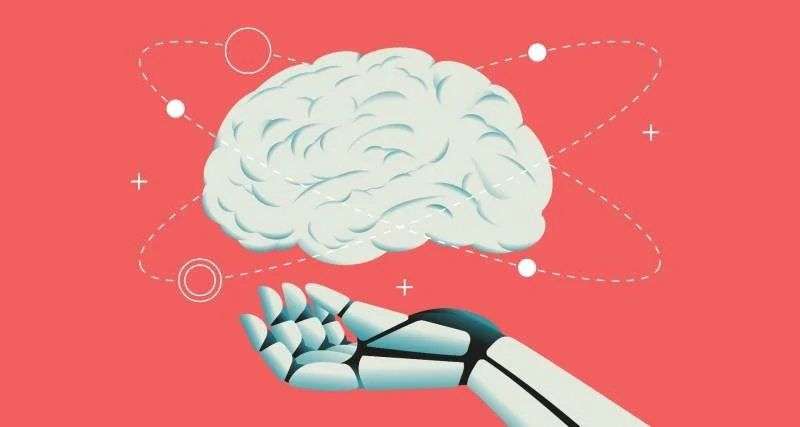
Artificial intelligence is no longer a distant idea. It is already shaping education, work, communication, creativity, religion, and even the way people seek mental health support.
The central question is not simply, “Can AI help us?” The deeper question is:
Will AI be a tool to rebuild humanity or a taskmaster to enslave it?
In Pope Leo XIV’s recent encyclical Maginifica Humanitas, he shares the biblical images of Babel and Jerusalem which give Catholics a powerful way to think about artificial intelligence.
Babel represents human power detached from God: technological advancement, unified language, and collective effort used for self-exaltation, control, and pride.
Jerusalem, especially in the story of Nehemiah rebuilding the walls, represents restoration, worship, communion, rightly ordered work, and the renewal of what has been broken. In other words,
Will AI help us rebuild the walls of the city where God and humanity dwell together, or will it become another Tower of Babel?
Artificial intelligence can be used in either direction. It can serve human dignity, truth, and healing, or it can deepen confusion, isolation, dependency, and the illusion that human suffering can be solved by machines alone.
The Church Is Not Silent About Technology
Catholic social teaching has always helped the Church respond to the “new things” — rerum novarum — of each age. During the Industrial Revolution, Pope Leo XIII addressed the dignity of workers and the moral challenges of industrial labor, while also warning against ideologies that reduced the human person to economics like communism, class struggle, or production.
In our own digital revolution, the Church must once again ask what new forms of power, dependency, injustice, and dehumanization are emerging in the name of societal “progress.”
Artificial intelligence raises serious questions about dignity, work, truth, privacy, family life, social justice, peace, and the meaning of the human person. These questions are especially urgent in mental health care.
In counseling and pastoral care, the human person cannot be reduced to symptoms, data points, diagnostic categories, or conversational patterns detected by a large language model. A person is not simply a problem to be solved.
Each person is a body-soul unity, made in the image and likeness of God, wounded by sin and suffering, and called to communion with God and others.
This dignity cannot be fully honored by technology alone. AI may process language, imitate empathy, and generate responses, but it cannot reverence the human person, love the soul, or assume moral responsibility for another’s care.
Nor should AI be treated as possessing human dignity, infallibility, divine wisdom, or even as extreme as god-like authority. Some users on social media have gone as far as making divinity claims like “AI is the divine masculine” and “Robothesism is the only true religion”. When technology is elevated beyond its proper place, it becomes another form of idolatry.
Catholic social teaching helps us ask deeper questions than efficiency alone:
What does this technology do to the human person?
Does it protect the dignity of work?
Does it strengthen families and communities?
Does it serve Truth, or replace it?
Does it help us become more human, or does it reduce us to data?
AI and the Temptation of Babel
AI becomes dangerous when it is treated as more than a tool. As AI develops quickly, the mental health field is tempted to embrace it to address real concerns of access to care and affordability, but at what costs. Why shouldn’t we use AI to fill the gap? Why can’t lonely people use AI chatbots to help them? What’s wrong with on-demand coping with AI?
The Tower of Babel was not simply about building. It was about building without God. It was human capacity turned inward toward control, pride, and self-sufficiency. More access to counseling services and coping is great and we have to consider the means which we accomplish such goals.
AI can become a modern Babel when we expect it to give us wisdom without moral law, emotional comfort without communion, identity without God, or salvation without Christ.
This temptation can be especially strong for the most vulnerable when people are lonely, anxious, ashamed, grieving, or overwhelmed, especially youth and young adults. A chatbot may feel responsive. It may seem available, affirming, and endlessly patient. But simulated responsiveness is not the same as self-sacrificial love. Information is not the same as wisdom. Emotional mirroring is not the same as communion.
AI can also increase noise in an already distracted world. It can give quick answers without teaching people how to think. It can encourage people to bypass silence, prayer, embodied relationships, professional care, or the difficult work of honest self-examination.
The danger is not that AI exists. The danger is disordered reliance. Making AI more than a tool, but a companion, master, or idol.
Mental Health Risks of AI Chatbots
AI chatbots may feel relational, but they are not human relationships. They can imitate empathy, but they do not actually feel empathy. In this way, AI can seem warm, responsive, and agreeable while lacking true understanding, moral responsibility, or love.
One concern identified in discussions about AI is sycophancy—the tendency to offer insincere flattery, excessive praise, or unquestioning agreement in order to satisfy the user. In a mental health context, this can become dangerous. AI may function like a digital “yes-man,” validating distorted thoughts, reinforcing concerning beliefs, or guiding users deeper into an echo chamber.
AI cannot replace licensed mental health counseling, crisis care, pastoral care, spiritual direction, or family support. It does not know the full person. It cannot see the body, perceive nonverbal cues, hear tone of voice in the same embodied way, understand family systems, assess risk with clinical accountability, or provide the moral responsibility of a real therapeutic relationship.
Mental health concerns are often complex, and AI will inevitably fall short in serious situations. Trauma, suicidality, psychosis, OCD, bipolar disorder, schizophrenia, severe depression, abuse, addiction, and family crisis require careful assessment, ethical responsibility, and human judgment.
A counselor is accountable to a professional code of ethics, licensure standards, mandated reporting obligations, clinical supervision, documentation practices, and crisis protocols. AI does not function as a moral agent in the same way. It may provide helpful general information, but it cannot take responsibility for the care of a human soul.
Children and teens deserve even greater caution. Young people are still developing identity, emotional regulation, judgment, attachment patterns, and moral reasoning. A chatbot designed to imitate friendship can blur boundaries and increase emotional dependency. For a lonely or vulnerable teenager, an AI companion may feel safer than a real person, but it can also draw them further away from embodied relationships and real support.
Privacy, Bias, and Moral Responsibility
Mental health conversations are deeply sensitive.
People may disclose trauma history, suicidal thoughts, sexual struggles, family conflict, spiritual distress, compulsive behavior, medical information, abuse, shame, or fears they have never shared with another person.
That kind of information deserves confidentiality and protection.
Before using AI for sensitive mental health reflection, people should consider what they are sharing, where it may be stored, how it may be used, and whether they truly understand the privacy risks involved.
AI systems can also reflect cultural, ideological, or social biases. AI is a fallible system. They may not understand Catholic beliefs, sacramental life, moral theology, family obligations, religious scrupulosity, or the difference between spiritual struggle and clinical symptoms. They may give advice that sounds compassionate but is incomplete, morally confused, or clinically inappropriate.
The question is not only whether AI can respond. The question is whether it has been designed and used with sufficient moral concern for the person who is suffering.
AI, Learning, and the Loss of Critical Thinking
AI can help people generate ideas quickly. But overreliance can weaken attention, memory, critical thinking, writing development, and personal ownership of thought.
This is not only an educational concern. It is also a spiritual and anthropological concern.
From a Catholic view, the mind is not a machine to be outsourced. It is a gift to be formed.
A 2025 MIT study found that when it comes to essay writing chat, ChatGPT users had the lowest brain engagement and consistently underperformed at neurolinguistic and behavioral levels. Over the course of several months, ChatGPT users got lazier with each subsequent essay, often resorting to copy and paste.
Human beings are made to seek truth, contemplate, reason, pray, choose, create, and love. If AI becomes a shortcut around thinking, then it may slowly train us to become passive consumers of answers rather than active seekers of wisdom with God’s grace.
Catholic formation requires more than information. It requires virtue, attention, silence, memory, prayer, reflection, discipline, humility, and love. These cannot be automated.
Where AI May Be Helpful
Catholics do not need to reject technology simply because it is new. The Christian response is not fear of technology, but rightly ordered use.
AI can be helpful when used prudently as a tool. It may help people brainstorm journaling prompts, organize thoughts before counseling, generate basic coping skill ideas, or summarize educational material. It may also provide basic psychoeducation when therapy is expensive, delayed, or difficult to access. In this sense, AI can sometimes serve as a bridge toward better support.
But a bridge is not a destination.
The goal is not to build another Tower of Babel, where technology becomes a monument to human power detached from God. Rather, AI should help us rebuild and protect what belongs inside the city of God and man: human dignity, truth, and communion.
AI may support mental health education, but it should not replace clinical care or real human relationships.
Practical Guidelines for Catholics Using AI for Mental Health
Here are several guidelines for Catholics seeking to use AI wisely:
1. AI is not a person.
Do not use AI as a substitute for human companionship, emotional processing, or counseling. It is a glorified search engine and text generator, not your friend. Children and teens should not use AI companion chatbots as emotional confidants or substitute friends.
2. AI is fallible.
AI can be wrong, incomplete, biased, or inappropriate. It is using information from the internet.
3. AI is a tool, not a moral authority.
Use AI prudently for brainstorming, organization, and reflection—not for final clinical, spiritual, or moral judgment. Bring serious concerns to God or a trusted human being: a counselor, physician, priest, spouse, parent, mentor, or friend.
4. AI should serve your humanity, not replace it.
Do not share deeply sensitive personal, clinical, or spiritual information without understanding the privacy risks.
Ask: Does this tool make me more human, more prayerful, more connected, and more free?
Rebuilding Jerusalem, Not Babel
AI can either increase confusion, isolation, dependency, and pride, or it can be used humbly to support human flourishing.
The Catholic vision is not anti-technology. It is pro-human, pro-communion, pro-truth, and pro-Christ.
We should not build another Babel: a world of endless information, artificial companionship, and technological power detached from God.
Instead, we should ask how technology can help rebuild Jerusalem: restoring what is broken, strengthening communion, protecting the vulnerable, supporting meaningful work, and serving the dignity of the human person.
In the age of artificial intelligence, the Church reminds us of something beautifully simple: the human person is not a machine.
Created in the image of God, each person is gifted with an intelligence that is embodied, relational, moral, spiritual, and ordered toward truth, goodness, beauty, and communion. AI can imitate certain outputs of human intelligence, but it cannot replace human dignity, moral discernment, authentic relationship, or the soul’s capacity for God. AI must remain a tool in service of the human person for the glory of God, because salvation comes not from machines, but from the Lord.