The Body Does Not Keep the Score: A Catholic Reflection on Trauma, Memory, and Healing
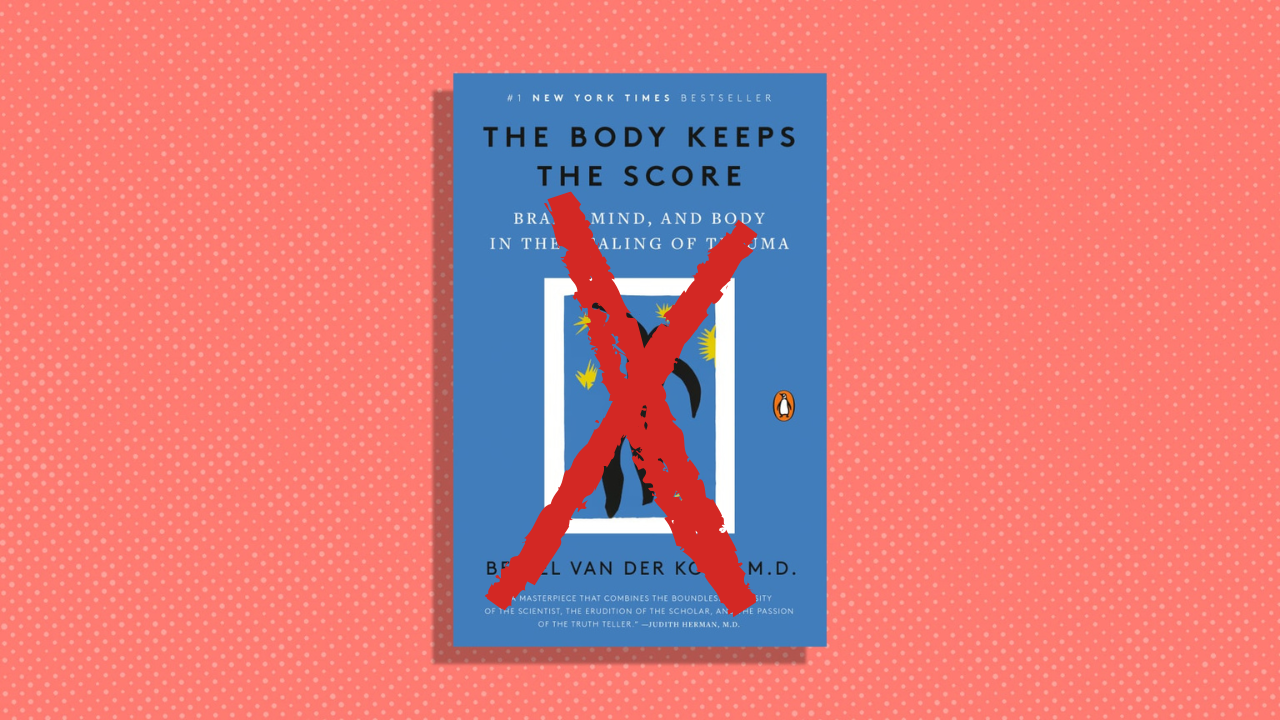
Illustration by Gene Woo Kim.
For years, trauma has often been described with the phrase, “the body keeps the score.” For nearly a decade, the idea that "the body keeps the score" has shaped public and clinical understanding of trauma. It is memorable, emotionally compelling, and it captures something real: trauma is often felt in the body: pounding heart, shallow breathing, hypervigilance, etc.
While emotionally compelling, this is biologically inaccurate. The body does not store trauma. Trauma is not preserved in the body like a file in storage where it needs to be released to find healing. Rather, the person develops patterned survival responses in the brain that once served a protective purpose, which is reflected in the body.
A recent article in Frontiers in Systems Neuroscience argues that trauma is not literally stored in muscles or fascia. Instead, the brain reenacts trauma through ongoing threat prediction involving the brain’s threat-detection networks, including the amygdala and prefrontal cortex. The body responds, yes, but it responds to what the brain has learned to expect. The result is hypervigilance, flashbacks, and avoidance-symptoms of a system caught in self-confirming predictions. In this sense, the nervous system functions less like a warehouse of wounds and more like an early warning system shaped by past experience.
A more precise way to put it is this: the body reflects patterns that the brain predicts and generates based on past experiences.
The brain keeps the score, and the body is the scorecard. A scorecard does store the events of life. It simply reflects what happened on the field, the score. In the same way, the body reflects what the brain remembers, what it has learned from past wounds, and what it now anticipates as danger. The body shows the effects, but it is not the primary keeper of the record.
The brain is what encodes the experience, links it to danger, and predicts future threat. The body then responds to that prediction with tension, panic, shutdown, hypervigilance, or numbness. The body is not the archive of trauma so much as the visible readout of a brain that has learned to expect danger.
The body sensations are present-day expressions of past wounds that have not been fully integrated. Just as a scorecard reflects what happened on the field of life, the score, the body can reveal the ongoing effects of experiences that took place months or even years ago.
A better phrase may be: the past becomes present.
Without clarity, people can drift into one of two extremes. On one side, trauma can be reduced to thoughts, beliefs, or attitude, as if it were only a mental problem or a mental state. People say things like, “It’s in the past. Get over it.” That fails to recognize the neurobiology of threat detection and the long-term impact of unresolved trauma on the whole person.
On the other side, trauma can be described as purely physiological, as if memory, meaning, interpretation, and perception no longer matter. People may think, “I just need to release it. I feel tense, so it must be because of my past.” This can turn the body into a blanket explanation for nearly every unwanted symptom and can lead to misattribution.
Neither extreme is sufficient. Trauma affects the nervous system, but it also shapes how a person remembers, interprets, anticipates, and responds to the world.
This is one reason EMDR’s Adaptive Information Processing model is so helpful. EMDR International Organization explains it with the phrase, “the past is present.” Disturbing experiences can remain insufficiently processed and continue to influence current perceptions, feelings, behaviors, thoughts, and body sensations.
The body is clearly involved, but the deeper problem is not that trauma is trapped in tissue waiting to be released. The deeper problem is that the memory has not been fully integrated, so the person reacts in the present as though the original danger is still happening now.
This also changes the target of healing.
If trauma is understood mainly as something stored in the body, healing can easily be framed as releasing what is trapped. But if trauma is better understood as an unintegrated experience that continues to shape perception, threat expectation, and bodily response, then healing is not simply about release. Healing is about retraining what the brain expects. That is a very different target.
This does not minimize the body. It gives the body its proper place. The body matters because it is part of how trauma is experienced and expressed. The racing heart, the tight chest, the startle response, collapse, numbness, and chronic sense of unsafety are real and important. But these symptoms are better understood as signals within a larger network of memory and prediction, rather than proof that trauma is literally stored in tissue. The body often acts as the messenger, not the vault.
So how should we speak about healing?
Healing is the process of increasing our capability to be free to love and be loved as God created us. It involves calming the nervous system, restoring flexibility, and helping the person experience safety again. It also involves integrating memory, updating expectations, and relearning that what happened then is not happening now. Trauma treatment is diminished when it is reduced to reasoning alone, and it is also diminished when it is reduced to bodily discharge alone. Real healing addresses bodily alarm, emotional reactivity, memory, interpretation, and relationship.
From a Catholic lens, this makes even more sense. The human person is not a mind trapped in a body, nor a body without a soul. We are embodied persons. What wounds us can affect our thoughts, our nervous system, our relationships, our memories, our sense of trust, and even our spiritual life. Trauma can make the world feel unsafe, love feel dangerous, and God feel distant. It can narrow a person’s life so much that vigilance feels safer than peace.
But this narrowing is not the person’s identity. Often, it is a protective response that once made sense. Many trauma responses begin as attempts to survive. Hypervigilance, withdrawal, numbing, appeasing, dissociation, emotional shutdown, or control can all function as protective mechanisms. The tragedy is not that the person adapted. The tragedy is that the adaptation remained active long after the danger had passed.
That is why Christian hope matters so much in trauma work. Healing is not about denying the wound. It is not about pretending the body does not matter. It is not about reducing everything to body either. It is about helping the person gradually learn, in mind, body and soul, that the present is not the past. Grace and evidence-based therapy can work together here, not by erasing history, but by helping memory become integrated, bodily alarm soften, and the person recover freedom.
So no, trauma is not only psychological. But neither is it best understood as something stored in the body alone.
A more faithful and accurate way to say it is this: trauma is carried by the whole person. Memory reactivates it. The brain predicts it. The mind interprets it. The body participates in it.
And healing restores the person by renewing the mind and calming the body so the past no longer governs the present so that the person can love and be loved by God and others freely as they were created.
Recommended Reading on Trauma
As a Catholic mental health counselor, I would not recommend The Body Keeps the Score as the primary book to learn about trauma. I would recommend these instead:
Janina Fisher — Healing the Fragmented Selves of Trauma Survivors
Pete Walker — Complex PTSD: From Surviving to Thriving
Stephanie Foo — What My Bones Know
References
Kotler, S., Mannino, M., Fox, G., & Friston, K. (2026). The Body Does Not Keep the Score: Trauma, Predictive Coding, and the Restoration of Metastability. Frontiers in Systems Neuroscience.
EMDR International Association. Adaptive Information Processing (AIP) Model.
Shapiro, F. interview and overview on EMDR and AIP, Guilford Press author page.